Showing posts with label Activity. Show all posts

Sunday, 27 October 2013

Japanese New Year Activities 2013


Banner_Japanese_New_Year_Activities

Japanese New Year Activities (Please arrange your program on your own.)
alt

Let's celebrate New Year in Japan. From Monday, December 30th 2013 until Friday 3rd January 2014 Asahi Nihongo offers various New Year cultural activities. During this week you will have the unique chance to take part in many events and to get to know the Japanese intimately in their most important and most favored holiday season.

You can download your application form for "Japanese New Year Activities" here.


Japanese New Year Activities 2013:
alt

Japanese New Year Seminar
Date: Monday, 30 Dec / Time: 10:00 / Fee: Free / Place: Asahi Nihongo

Tenjin Tour
Date: Monday, 30 Dec / Time: 13:00 / Fee: Free / Place: Tenjin

New Year Greeting Card
Date: Monday, 30 Dec / Time: 16:00 / Fee: 500 Yen / Place: Asahi Nihongo

Bonenkai Party
Date: Monday, 30 Dec / Time: 18:30 / Fee: 3500 Yen / Place: Tenjin

Nanzoin's Sleeping Buddha
Date: Tuesday, 31 Dec / Time: 11:00 / Fee: 3000 Yen / Place: Sasaguri-machi

New Year's Eve Soba
Date: Tuesday, 31 Dec / Time: 17:30 / Fee: Pay for yourself / Place: Tenjin

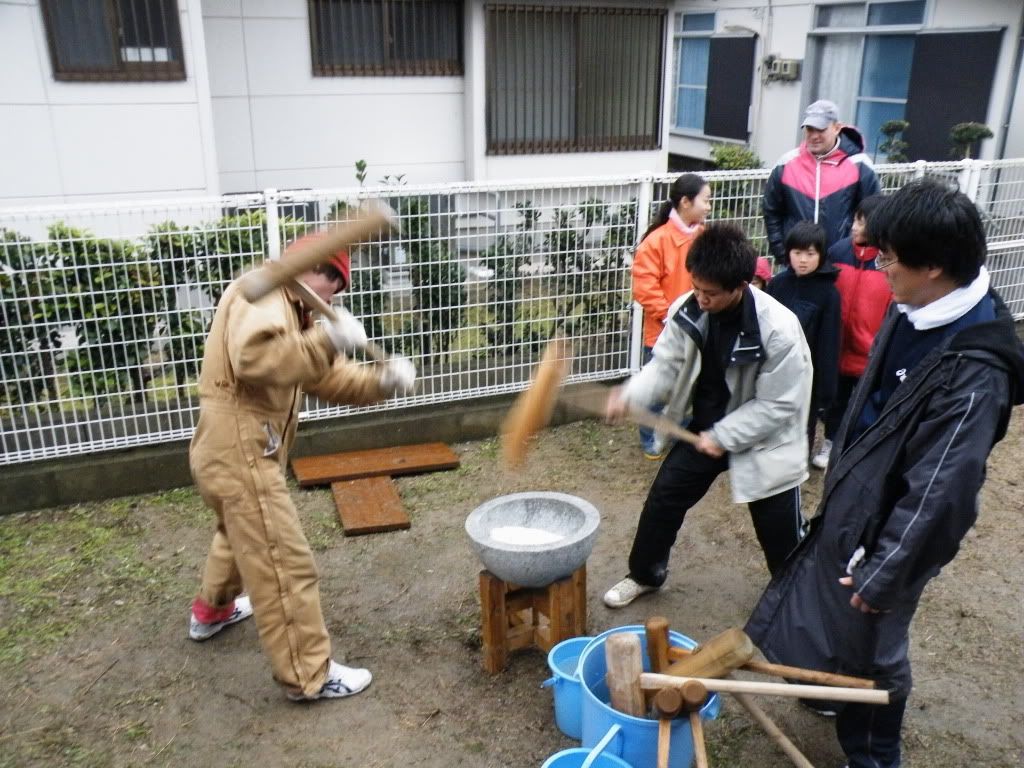
Rice Cake Ceremony
Date: Tuesday, 31 Dec / Time: 19:00 / Fee: Free / Place: Hakozaki-Gu

Hatsumode Dazaifu Tour
Date: Wednesday, 01 Jan / Time: 11:00 / Fee: 3500 Yen / Place: Dazaifu

First Onsen of 2014
Date: Wednesday, 01 Jan / Time: 16:00 / Fee: 700 Yen / Place: Yu no Hana

Yakiniku
Date: Wednesday, 01 Jan / Time: 17:30 / Fee: 3500 Yen / Place: Tenjin

"Jigoku Meguri" Tour
Date: Thursday, 02 Jan / Time: 09:00 / Fee: 9000 Yen / Place: Beppu

Yatai (Local Food Stands)
Date: Thursday, 02 Jan / Time: 18:30 / Fee: Pay for yourself / Place: Tenjin

Multi-Language Karaoke
Date: Thursday, 02 Jan / Time: 20:00 / Fee: 2500 Yen / Place: Tenjin

Sansha-mairi (Lunch is included)
Date: Friday, 03 Jan / Time: 11:00 / Fee: 2500 Yen / Place: East Fukuoka

New Year & Farewell Party
Date: Friday, 03 Jan / Time: 18:00 / Fee: 3500 Yen / Place: Fish Restaurant Zauo

estimate

Thursday, 22 August 2013

Japanese Fireworks (Hanabi)


In Germany it`s illegal to buy fireworks during any time of the year other than right before New Year`s. And usually that`s also the only time you get to see them.

In Japan fireworks are treated very differently and take place during summer. The “hanabi” itself is the main event (not just part of a closing ceremony). In August I went to see the “Oohori Fireworks” which are an annual event that is well known throughout all of Japan and attracted around 450.000 visitors last year. Many people dress in a Yukata for that occasion and reserve seats hours before the official start.

This year it started at 08:00 pm and I was getting worried about missing most of it, because my friends and I were running late when someone told me that it ends at 09:30 pm.

That`s one and a half hours of fireworks and if you get hungry you can buy something from the many food stalls that pop-up everywhere just for this day.

Every year they launch around 6000 rockets and the result is amazingly beautiful. No matter where you turn, there are people standing around or sitting on the ground. Some people who have obviously been sitting there since the early morning and some who are craning their neck trying to catch a glimpse of the show.


Tuesday, 16 July 2013

Omikoshi Festival at Joyo

Every year in July, Asahi Nihongo students and staff  join the famous "Omikoshi Festival" in a beautiful town called "Joyo", about 60 kilometres from Fukuoka.

A 御輿 ("Mikoshi") is a portable shrine that is carried during festivals. As expected, our students took part in the action. The biggest (and heaviest) Mikoshi was waiting to be carried through town. Luckily, we were not on our own and received help from some of the nice Joyo locals.

While carrying the Mikoshi, the spectators cheer at you and use water hoses, buckets and even bath tubs to splash you with water. A second set of clothes is highly recommended!

To regain some strength, we had a second lunch at the riverside and went to a nice Onsen on top of a hill. Later on the same day, the townspeople gathered on the huge festival ground to enjoy live music, Taito drummers and dancing. We had the chance to try local specialities, also ice cream and soft-drinks. All money raised during the festival is used to restoration of the town, which heavily suffered from the flood in 2012.

The festival ended with a jaw-dropping 1-hour firework.

Many thanks to the people at Joyo who were very friendly and welcomed us as guests. We spend an unforgettable time. See you next year!

Tuesday, 16 April 2013

Baseball and the Softbank Hawks

There are many sports that are popular in Japan, but baseball is one of the most popular. The baseball season starts from early April until November, and comprises of 12 different teams from different parts of Japan.
Throughout the year, the baseball games in Fukuoka are held at the Fukuoka Yahoo dome. The dome’s surrounding area also has many baseball related things: a baseball museum built into the dome, a baseball merchandise equipment shop, and some other monuments dedicated to pastplayers from Fukuoka’s resident baseball team.
The local team in Fukuoka is the Fukuoka Softbank Hawks. As the name suggests, their mascots are hawks, and much of their design and advertising is based around it. As the baseball season progresses, Fukuoka becomes more lively with Hawk’s fans, even some shops and restaurants getting into the spirit – the shopping mall located close to the Yahoo dome has been called "Hawks Town” due to the Hawks fans.
The Hawks team is a much-loved part of Fukuoka, so it is well worthwhile watching one of their games during the baseball season.

Monday, 11 March 2013

Karaoke

Karaoke is an activity in which you sing to the music of songs which have had the original singers voice removed, making you the star. In Japan, karaoke buildings are all over the place, with equipment aiding you to sing those songs.
Karaoke originates from Japan, and many Japanese go to Karaoke buildings with friends. It is known as a good way of bonding, as many people can join in singing the same song, and the atmosphere is very nice. Most karaoke buildings also offer meals and drinks too.
There are thousands of songs to sing, the majority being English, Japanese, Korean and Chinese songs.
Karaoke is popular all over the world, but nowhere near as popular in Japan: because of that, there are many places you can go to sing karaoke. The most popular place in Tenjin is Tenjin Nishi-doori, where at least a dozen karaoke places exist.

Tuesday, 15 January 2013

Nihon Ryouri

„Nihon Ryouri“, which means Japanese food, does not just mean Sushi and Rice balls. Indeed it is not rare that Japanese sometimes eat rice three times a day, but the Japanese diet also includes a wide variety of different noodle dishes.

 “Soba” for example are brown colored noodles made of buckwheat. They are very high in fiber, healthy and can be eaten hot in soup with toppings like fried seafood or seaweed and cold with a kind of dipping sauce.

 “Udon”, very soft, thick and white wheat flour noodles can be eaten in many ways as well. Similar to “Soba” you can eat them hot or cold, but also fried with meat and a lot of vegetables.

 “Lamen”, recently very popular in the Western countries, are mostly thin wheat noodles served in a meat based broth with different toppings like a boiled egg, sliced pork or dried seaweed. There are 4 different main flavors of soup you can find in Japan, but the most popular one in Fukuoka is called “Tonkotu”. It is a white colored broth made from boiling pork bones.

 “Chanpon” is a noodles dish, originally from Nagasaki. The yellow colored noodles are served in a soup made with chicken and pig bones and lots of fried vegetables, pork and seafood. It is very delicious and because of the big amount of vegetables very healthy as well.

New Year’s Day

New Year’s Day is a very important time for the Japanese. Most shops will be closed on New Year’s Day, and many people will have the day off.
On new year’s, many people will visit a shrine, to pay respect for the new year (this is called hatsumode - first shrine visit of the year)
While there, many people will also receive their fortune for the new year, buy new charms, and the larger shrines will also have food stalls & some playground games.
For the week after new years, many shops will have New Year’s sales. Many people come to these events, so many shops quickly become crowded.

For New Year’s, I went and visited the Dazaifu shrine with my friends. Dazaifu is one of the more popular shrines in Fukuoka, so many people were there paying their respects. Thankfully we went in the evening, so there weren`t as many people. (many people also arrive at midnight, even though they may have to wait in line for hours)

While there, we all received our fortune. I received great luck (daikichi), and after that, we ate takoyaki, yakisoba & squid.
In the days following the New Year’s, all the shops in town were congested, with many people there for the sales. We decided to return on the weekend, when it would be less full.

The New Year’s Day in Japan is one of the best New Year’s I’ve experienced, and I’d recommend people experience it as well.

Friday, 11 January 2013

Setsubun

Setsubun is the day before the beginning of spring in Japan.
During this festival it is a custom to throw beans (Mamemaki) and therefore it is also called the Bean-Throwing Festival.
Throwing those fortune beans invites luck and drives out all the bad things.

In Fukuoka, we celebrate Setsubun at Tochoji Temple in Hakata on the third of February.
Our school also takes part in the festivities and some students scatter beans from a stage dressed up as either a demon or as one of the seven gods of fortune.

Join us and collect your good luck!

Saturday, 15 December 2012

New Year in Japan

In Japan there are many New Year’s traditions. I want to explain some of those, you can experience during your stay in Japan during New Year!

Celebrating New Year in Japan means paying special attention to the first time something is done in the new year. One of those “firsts” is the first shrine visit of the year (Hatsumōde). Many people visit the shrine right after midnight or during January 1st to send out their prayers for a successful new year. If the weather is good, you can see a lot of people wearing the traditional Kimono! Another important first is the first dream of the year (hatsuyume) which Japanese believe is an omen for the rest of the year.
You will find a lot of more “firsts”, you can experience with the friends you made!

While the people in western countries usually send out Christmas cards the Japanese have a custom of sending New Year’s postcards (nengajō) to their friends and relatives. They are sent out so they will arrive on January 1st and the post offices guarantee that they will be delivered.
You can buy the postcards or even make them yourself.

There is also traditional Japanese food that you can only enjoy during New Year and many other
traditions you can only experience during this time of the year.

Monday, 10 September 2012

Fukuoka Tour

We participated in Fukuoka Tour last Saturday.In the tour,we went to Fukuoka City Disaster Prevention Center.Japan is a country with many disasters.So we must learn how to respond to disasters.We went to Fukuoka Tower or Howks Town too.We had a good time.

Tuesday, 28 August 2012

"MURAICHI"-Japanese IZAKAYA

After "ORIGAMI", I went to “MURAICHI” to eat dinner with Mr.Binner, two students from Germany and a Japanese student.  “MURAICHI” is a Japanese restaurant and called “IZAKAYA”. 
There are many kind of Japanese and European food, alcoholic drinks and dessert in “MURAICHI”, all these foods and drinks are very delicious. 

I talked to one of the students from Germany about Japanese and German culture, for example, favorite Japanese and German singer, food and people.  It was very interesting! 
Most interesting for me was the difference of how to learn foreign language between Japan and Germany.  Mainly Japanese learn how to read and write, but German learn how to speak.  Although the student from Germany started studying only a year ago, he speaks Japanese very well.  I want to be like him who masters foreign languages.

We enjoyed eating, talking and drinking.  It was very a fun and special time!
It is interesting for everyone to talk and learn different culture.  We would like to go to eat dinner or lunch again!

"ORIGAMI"

Last Thursday I attended an activity which is called "ORIGAMI".
"ORIGAMI" is folding color paper, and a traditional Japanese activity.
There are many colors in "ORIGAMI", for example pink, red, yellow, blue, black, white...and so on!
And there are many kinds, too.  typical of that is "CHIYOGAMI" which is a traditional Japanese pattern(for example, "KIMONO" or "YUKATA" pattern).
"ORIGAMI" you can make everything!!  Animals, Flowers, pianos, ships, clothes...

So yesterday I made various things with a Japanese teacher and a student who is from Germany.
I was surprised that a student who is from Germany is very good at "ORIGAMI"!!
First, we made a piano, which is small and cute.  But it was difficult to make.
Next we made "KABUTO"which is a SAMURAI's helmet.  The student from Germany was very excited and impressed.

Making is snail is very difficult.
How to make a snail is very complex.  We tried very hard to make are.
The finished snail is pretty cute!

We enjoyed "ORIGAMI" and had a fun time!!   

Friday, 24 August 2012

City Tour in Tenjin


Yesterday, I took part in a “City Tour” with other internship students from Germany.
I am 18 years old and there are other 18 years old, too!!!! I was very happy.

We went to Ankoku-ji, the 100yen shop, Rainbow plaza, Kego-jinjya, and Mandarake. We walked a lot so my feet were crying ^^

Ankoku-ji is not so far from the school. There were many people eating lunch, and taking pictures.
 The 100yen shop is in North Tenjin. So other internship students from German, they bought some things.
The Rainbow plaza is in the IMS (Inter Media Station). A lot of foreigners gather there.
And there is a lot of information about Japan.
 Kego-jinjya is very beautiful place. It is in the center of Tenjin.
And Mandarake sells a lot of comic and figure. To my surprise, comic are sold about at only 52yen!!!!

 I had very good and special time. Thank you.


Mayuko Takahashi

Thursday, 23 August 2012

“KIMINO” “YUKATA” and “JINBEI”


I will explain the difference amongst “KIMONO”, “YUKATA” and “JINBEI”.

First, “KIMONO” is the Japanese traditional and formal costume.  Getting dressed in a KIMONO is also a formal “Procedure”.  When we attend a “Tea ceremony”, we often wear “KIMONO”.
 

Next, “YUKATA” is a “KIMONO”.  It is summer costume and the most informal style of “KIMONO”.  When we go to a Fireworks Display, we often wear “YUKATA”.
“YUKATA” is not as expensive as “KIMONO”.

Lastly, “JINBEI” is one of the “KIMONO” too.  It is the most popular among young people.  But it is generally worn men and children.  It is easy and comfortable to wear.

Thursday, 19 July 2012

Origami!


This afternoon we did origami.
Nowadays the paper comes in many new cute colors and designs!


First time is always difficult to keep up, but the second time is already much easier. Sadly we ran out of time and would have liked to continue for at least another hour!

Wednesday, 18 July 2012

The Aritayaki from last week arrived!


We finally got our artwork back from the porcelain factory. It is so nice that you can bring a tangible memory from Fukuoka back home!

Calligraphy and Yatai!


At first we learned how to make the basic strokes. It required deep concentration.


There are many ways to write Japanese characters and we could choose the one we liked the best.


And here is the master piece after hard practicing!


In the evening we went to eat ramen and yakitori at the yatai. There was oden as well, but all of us chose to have the famous Hakata ramen!


Wednesday, 11 July 2012

Aritayaki


Today we did Aritayaki. First we sketched the image by pencil, and then we just added ink on top. It was much more difficult than you would think! But we are looking forward to receiving our work after it is finished at the porcelain factory. It will be such a nice memory!

Visit to the Fukuoka Zoo


Today we visited the Fukuoka Zoo.
There were so many cute animals and we could take photos very close which is usually quite difficult in other zoos.


We could also take a glimpse at the Tsushima Leopard Cats. There are only about 100 of them in existence and the Zoo is trying to raise awareness of the need to protect the species. Unfortunately they were too shy for pictures!

Monday, 9 July 2012

City Tour

Every Monday is the day of the City Tour !I guide new students around the school.Today I was guided two students.They came from the UK and Germany.I was so surprised because they are very good at Japanese.I hope they learn a lot and enjoy the life in Fukuoka!